Transformers
What Is a Ferrite Core Transformer
A ferrite core transformer is a high-frequency electrical device that uses ferrite cores to efficiently transfer energy between windings.
Read More

Yes, you can overload a dry type transformer, but it comes with significant risks. Overloading causes excessive heat, which can deteriorate insulation, reduce efficiency, and potentially lead to electrical faults or failure.
While short-term overloads may be tolerable, prolonged overloading significantly shortens the transformer’s lifespan.
Prolonged overloading of dry type transformers causes excessive heating in the coils. This elevated temperature deteriorates the insulation material surrounding the coils over time. As insulation breaks down, it loses its ability to effectively separate and protect the windings.
Prolonged overloading of dry type transformers increases short circuit risks. Excessive heat deteriorates insulation, creating weak points between windings. These vulnerabilities can cause electrical arcing between adjacent windings or different phases. Severe cases may lead to short circuits between windings and the grounded core or enclosure.
Dry type transformers often experience iron core insulation degradation under prolonged overloads. This deterioration increases eddy currents within the core, causing localized heating and further damage. As insulation breaks down, transformer efficiency decreases while operating temperature rises.
Insulation weakening accelerates the aging process, allowing more eddy currents to circulate. These currents generate additional heat, hastening insulation breakdown. A cycle of rising temperatures and declining performance ensues. Unchecked, this can create hot spots within the core, potentially leading to complete transformer failure.
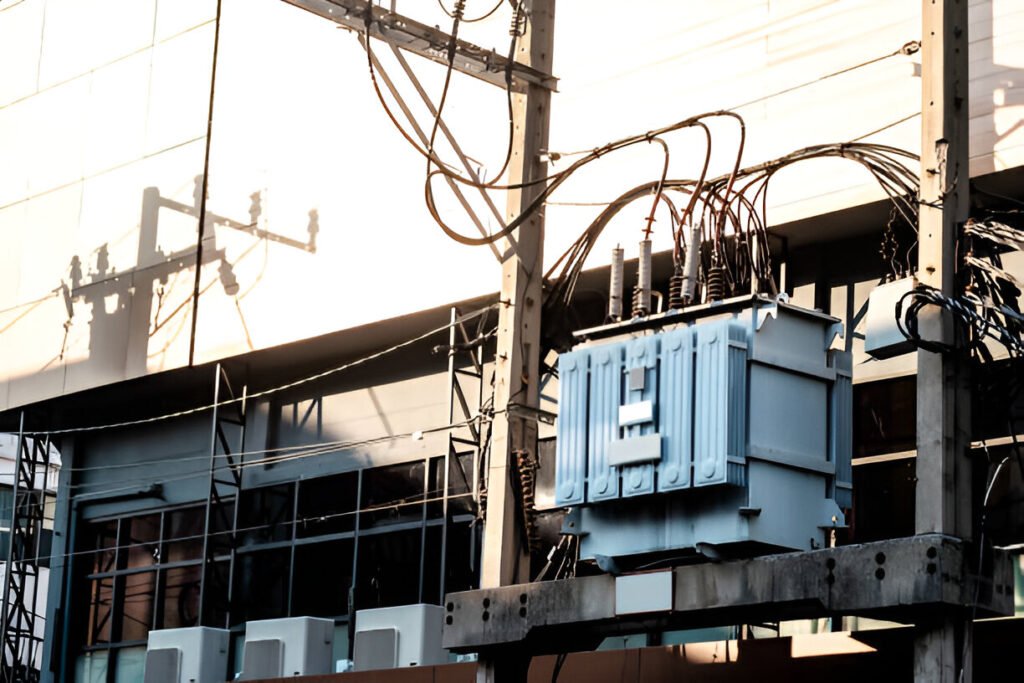
Cooler surrounding air enhances heat dissipation, allowing higher overload potential. Hot environments reduce the transformer’s ability to shed excess heat, limiting its overload capacity.
For every 10°C increase in ambient temperature above the transformer’s rated temperature, load capacity decreases by about 10%. In a 40°C environment with a transformer rated for 30°C, reduce the load by approximately 10%.
Lower initial loads allow greater overload capacity due to cooler windings under normal conditions. This provides more thermal headroom before reaching critical temperatures during overload situations.
Transformers running close to rated capacity have less overload flexibility. Their windings and core operate at higher temperatures, limiting additional heat generation capacity. Assessing typical load profiles helps determine a transformer’s ability to handle short-term overloads.
The transformer’s insulation system, made of materials like epoxy resin or silicone, protects windings and core from electrical breakdown. Higher-quality insulation withstands higher temperatures, allowing greater overload potential.
Heat dissipation manages temperature rise during overloads. Dry type transformers use air circulation for cooling through natural convection or forced-air systems. Enhanced ventilation or cooling fans increase the transformer’s ability to handle overloads.
Heating time constant represents the duration for a dry type transformer to reach 63.2% of its final temperature rise under constant load. This value impacts a transformer’s overload capacity. Longer heating time constants allow greater short-term overloads without excessive temperature increases.
Dry type transformers typically have heating time constants between 1 and 3 hours. Larger transformers often have longer time constants due to increased thermal mass.

Three considerations enable appropriate reduction of transformer capacity:
Strategic utilization of transformer overload capacity reduces spare capacity requirements and minimizes spare units needed. This approach optimizes transformer setups while maintaining reliable operation. In a scenario with two 1000kVA units handling a 1400kVA load, leveraging overload capability meets demand without additional units or excessive spare capacity.
Monitoring dry type transformers during overload conditions prevents damage and maintains safety. Follow these practices:
Dry type transformers are typically designed for continuous operation at 100% of their nameplate kVA rating. However, they can handle temporary overloads of up to 150% for short durations.
Modern dry type transformers incorporate thermal sensors, overload protection, short-circuit safeguards, fire-resistant materials, ventilation systems, ground fault protection, and remote monitoring capabilities. These features enhance safety and operational reliability in various applications.

A ferrite core transformer is a high-frequency electrical device that uses ferrite cores to efficiently transfer energy between windings.
Read More
Explore the key differences between a CSP transformer and a conventional transformer in terms of design, function, and application.
Read More
Distribution transformer load monitoring tracks power usage to prevent overloading and optimize performance. Learn how it works and its benefits.
Read More